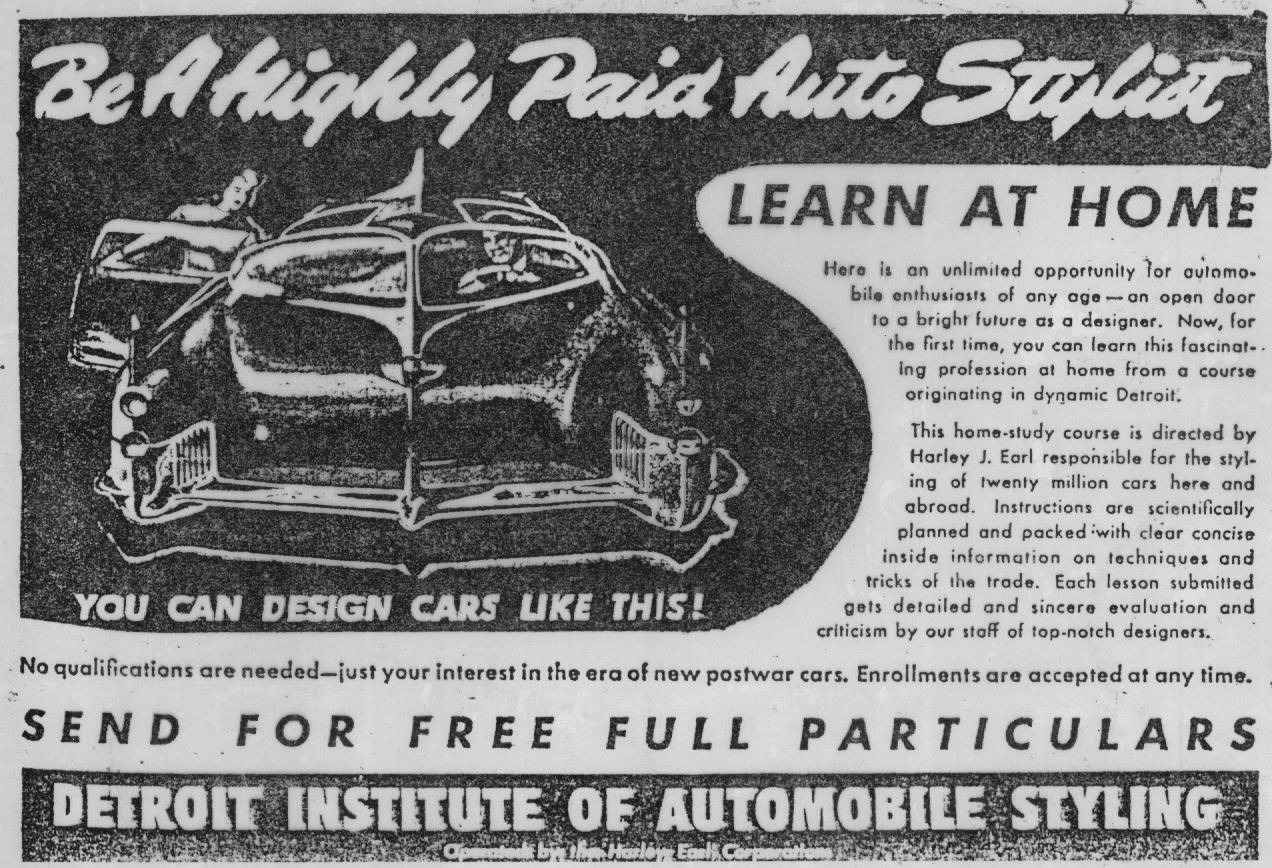
Many years ago I stumbled over this wonderful ad from The Institute of Automobile Styling in Detroit, later a part of Center for Creative Studies I guess. This was before you could study industrial design in Norway, and the only option was to travel abroad. This ad really got my imagination going, especially the line”no qualifications needed” (!) Suddenly the world was wide open for the young kid living on this little island on the west coast of Norway, day dreaming about the fantastic possibilities on the other side of the Atlantic ocean. Many years later my dream came through, and I got to study automotive design at CCS in Motor City.
Advertisement for the Detroit Institute of Automobile Styling← journal
Detroit 1986 – The anatomy of cars
Rewind
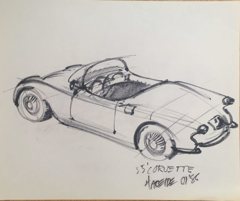
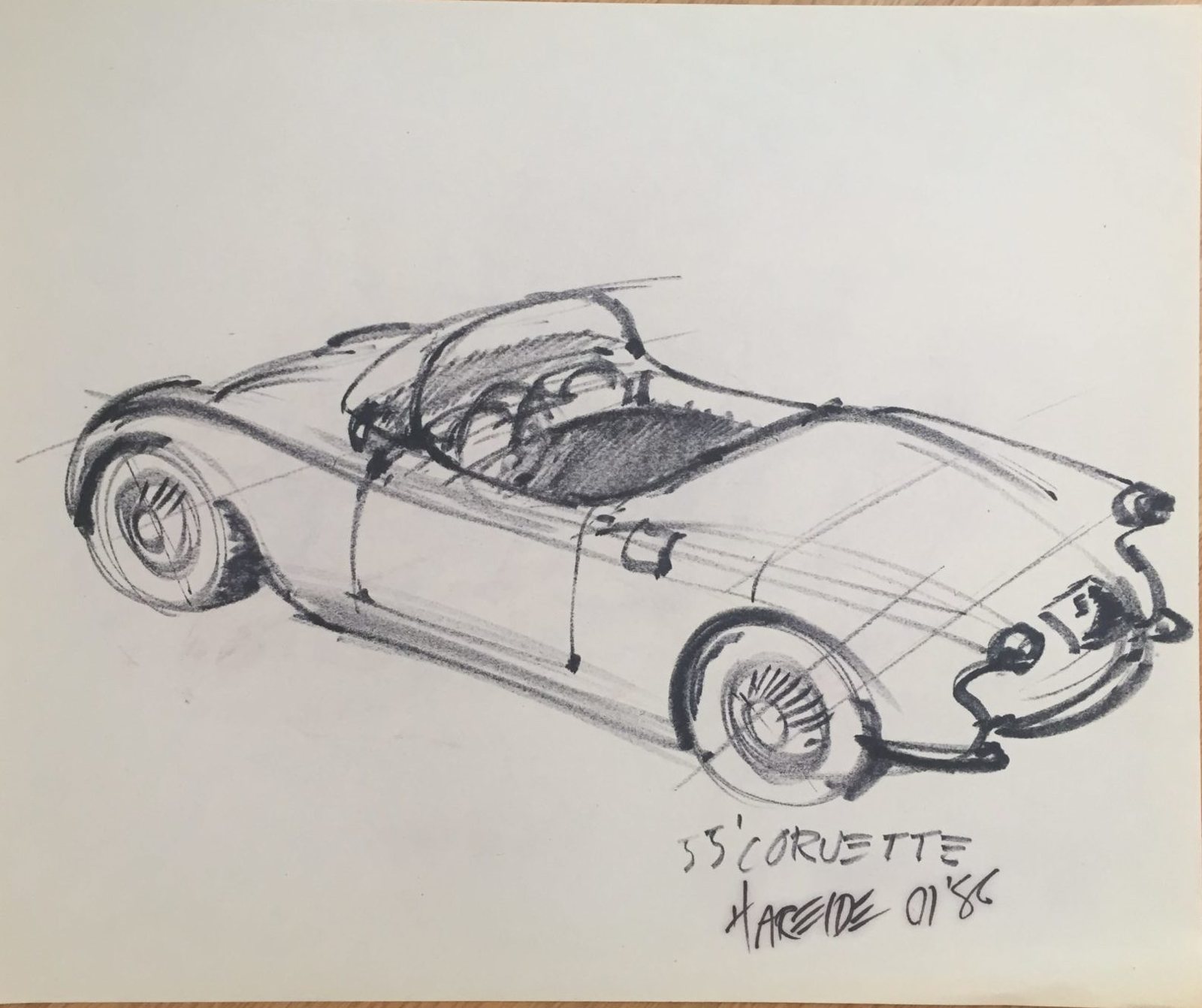
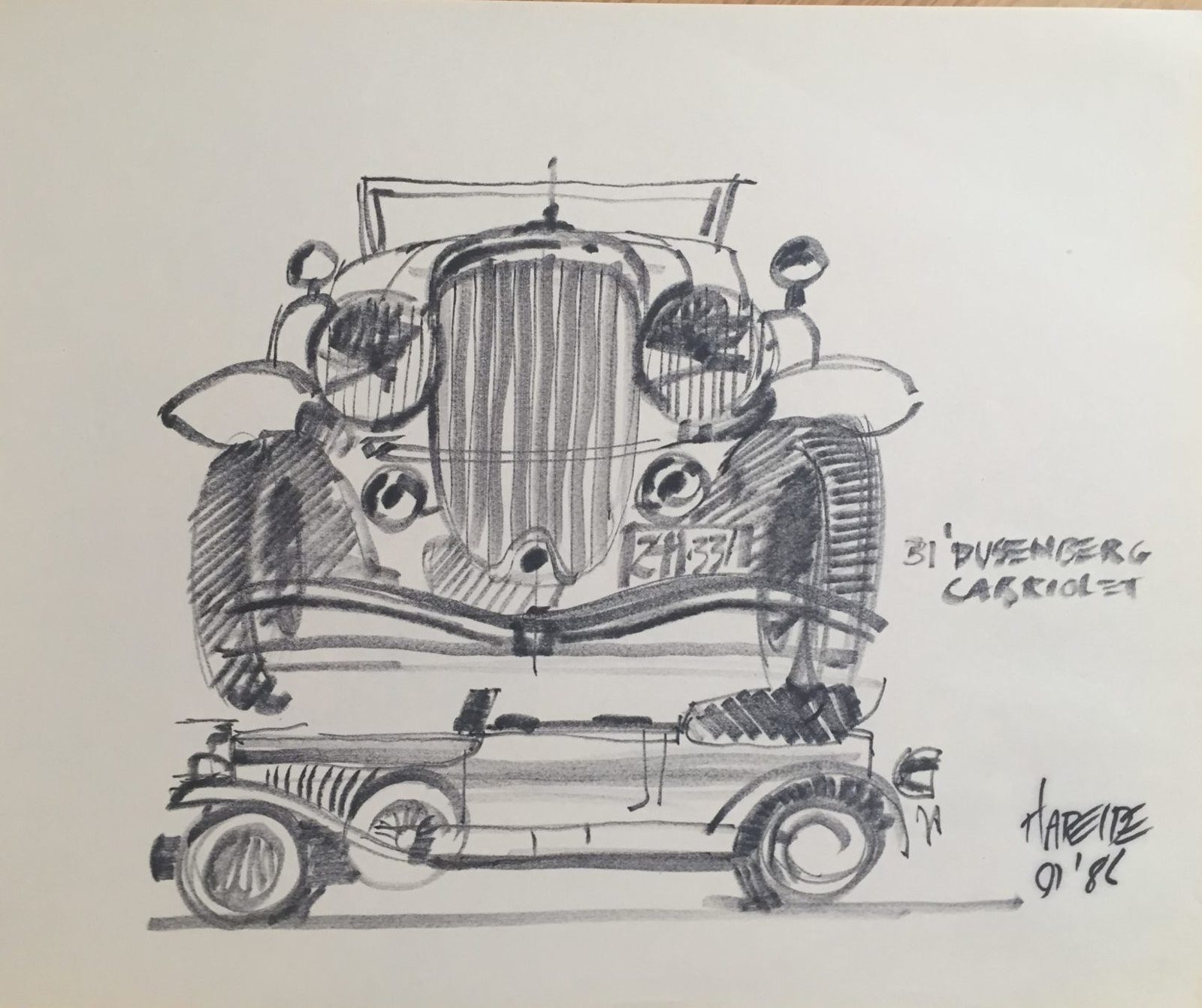
In 1986 after my MFA in product design in Gothenburg, I had a year or so at Center for Creative Studies in Detroit to focus on automotive design. Quite a contrast. We were drawing cars the same way as we did croquis nude drawings at the university in Sweden. Using the same tools, charcoal on big size newsprint paper paper, such a blast. Sitting for hours at the Henry Ford Museum learning about automotive anatomy, and then doing our own experiements on proportions. Great teachers too, from the big three. Tom Peters, Preston Brunning, Homer C. Lagassy and so on. Such a valuable time!
Felt pen on newsprint – Einar Hareide 1986Felt pen on newsprint – Einar Hareide 1986← journal
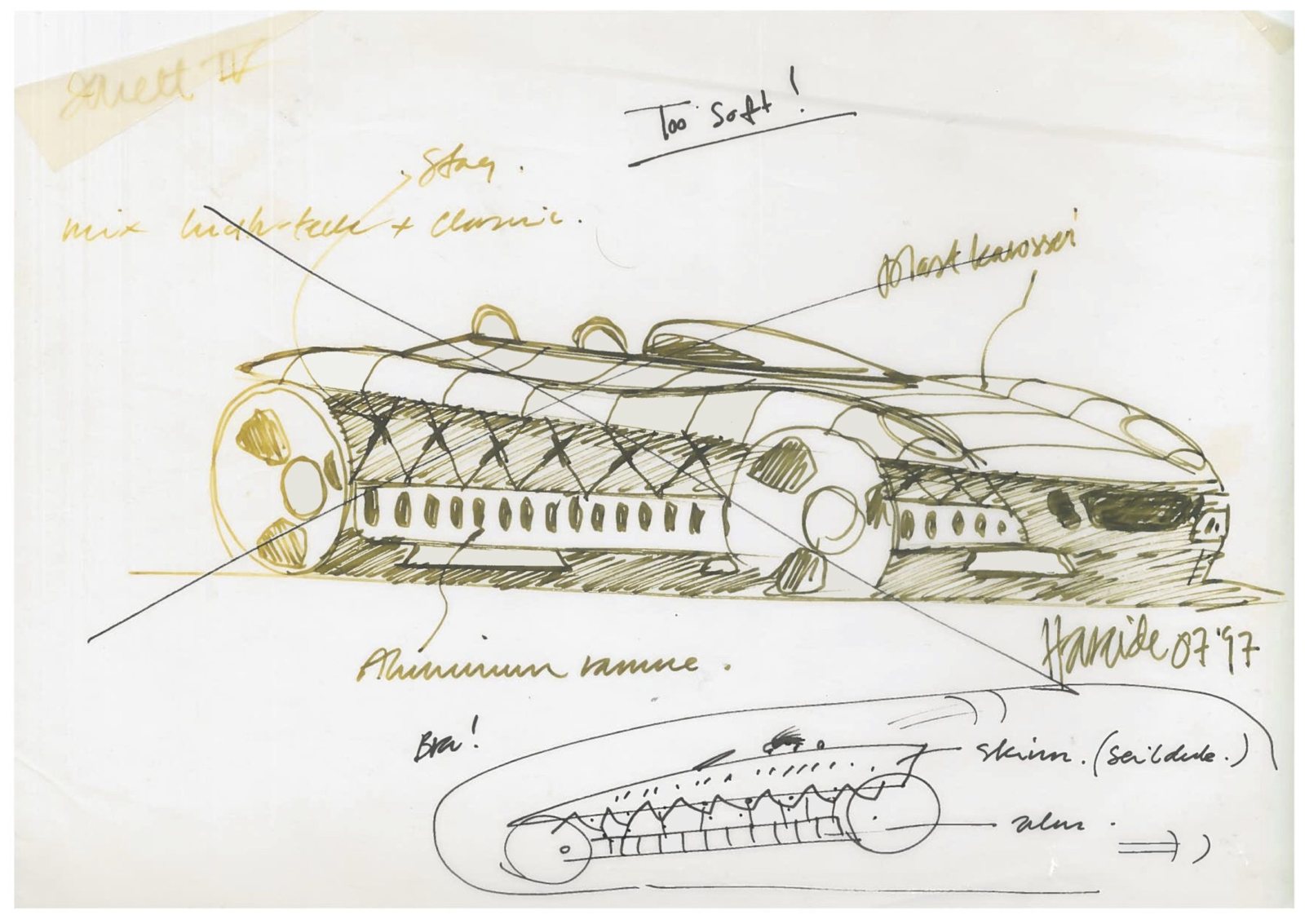
Saab Sonett 1997
Rewind
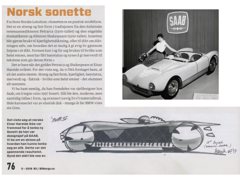
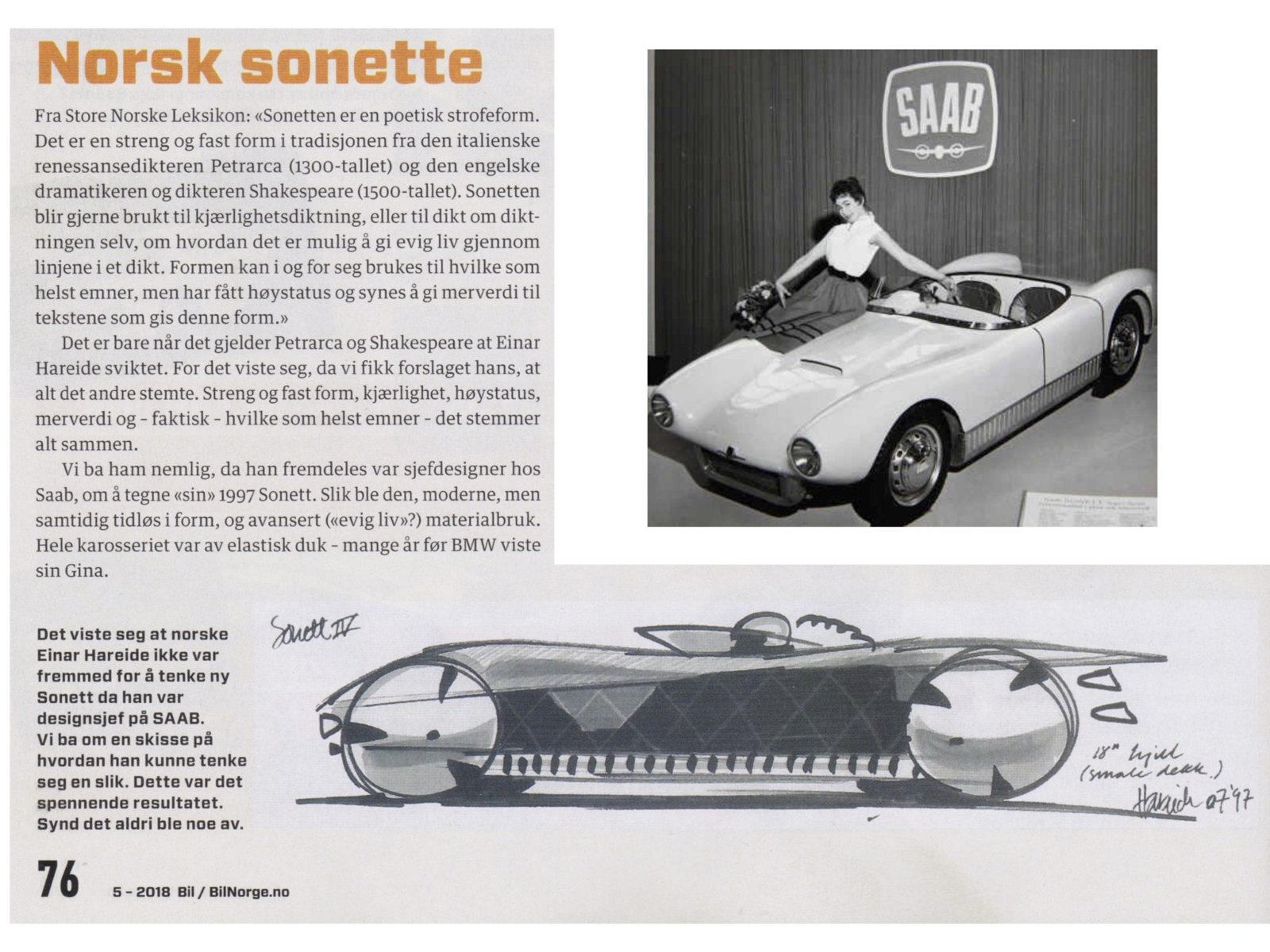
20 Years ago the legendary Norwegian car journalist Jon Winding Sørensen asked me to draw a sketch of a possible future Saab Sonnet. The resulting little sketch was very inspired by the stunningly beautiful Sonett Super Sport concept from around 1954. Instead of a plastic body I went for textile over supporting tensioning rods, much like the ones you find on a sail. The perforated lower sill i kept basically intact. Looks still ok. after 20 years, but on the other hand, my inspiration the Sonett Super Sport is over 60 years old imagine that!
Article by Jon Winding Sørensen in Bil Norge 5 – 2018← journal
Night Panel
Thoughts about design
In his Book “Enchanted Objects” David Rose writes about his worst nightmare. A future where the things we surround ourselves are reduced to black rectangles of different sizes that we blindly stare into. Sounds like today doesn’t it?
This information overload, and dealing with it in a safe way, has crated the need for a new generation of interaction designers to sort out the screen based mess. But rest assuredly, this is a transitional period. The enormous amount of information will be reduced by AI, and the need for permanent black rectangles will disappear. Off course you will have your own personal AI to filter out the crap from commercial AI. Only the information needed will be visible and can be placed freely on any surface or shape. This will gave us fantastic opportunities for creating beautiful objects with storytelling qualities, without worrying about fitting in a black rectangle.
Information and the interaction with it will become “intelligent” and customised in real time, to what you need at any given moment. The digital clone that you wear will adjust the car, home, hotel and so on to your need and preferences, perfect for the future of not owning but paying for the service you need, still being able to personalise the product you do not own.
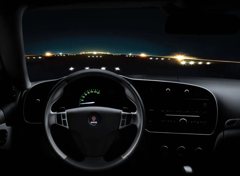
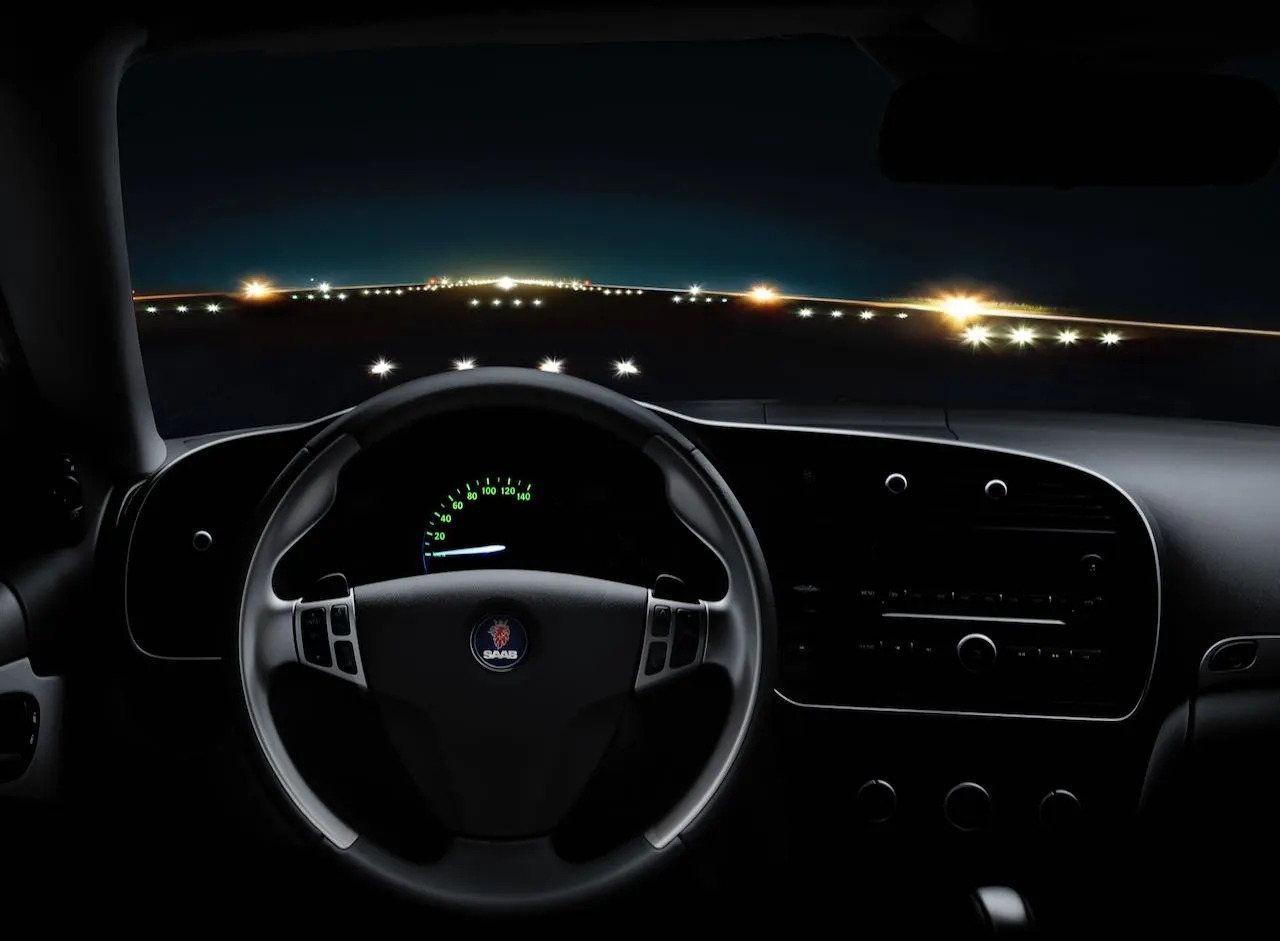
Back at my time at SAAB, the car company famous for its quirky but extremely cool cars, we had a saying that went like this: “The most important instrument in the car is the windscreen.” That was the reason we had a very clever switch, quite “Victorian” by to todays standards, but never the less very clever. It was named Night Panel. When you pressed that switch at nighttime, all the instruments went black and the only lit instrument was the speedometer. Nothing to disturb you from the action happening in front of the car that was now clearly visible through the windscreen. This was the total opposite of the standard of that day and surprisingly often today; to have a lamp shining for everything that works. Ponder that.
An old quote sums it nicely up: A designer knows he has achieved perfection, not when there is nothing left to add, but when there is nothing left to take away.
This is post is from a lecture about how we relate to the world and how new technology might affect us in the future. Its from a couple of years back, but its still pretty valid.
Its about asking the question -What if?
There one industry that has made it a good tradition to ask this question, and that´s the automotive industry.
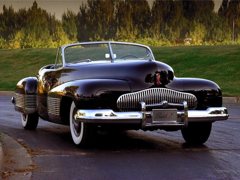
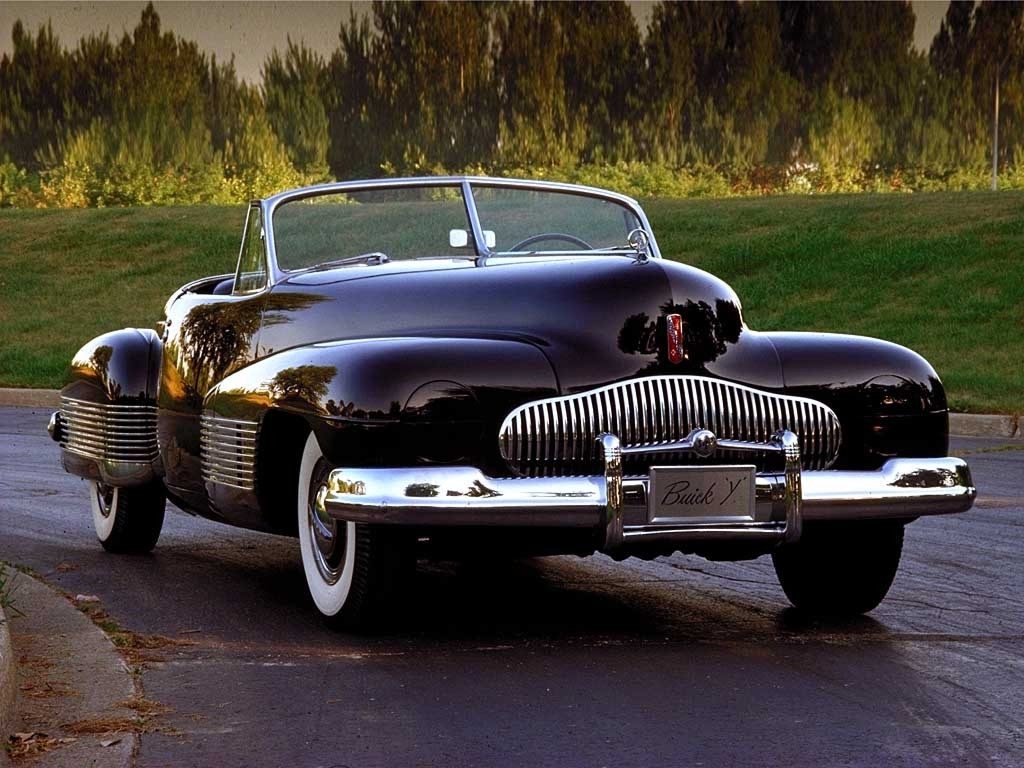
One of the first concept cars, Buick Y-Job, was designed by Harley Earl in 1938. Car exhibitions such as Motorama did much to popularize concept cars in the 50’s, and today, many of us are looking forward to a new show car, – and as a side effect we might even look forward to the future.
Photo General Motors
Development of concept cars is a very important tool for the automotive industry and is used to show new opportunities, test and develop new technology, create synergies between car manufacturers and subcontractors, and of course, creating internal and external enthusiasm.
It’s about being ahead of the events. An important element here is to create scenarios and raise issues about future human needs, infrastructure, demography, environment, material technology, legal requirements and security. This is how our brain works too. It is continously building scenarios based on existing data that it uses to predict what might happen sometime in the future.
While technology evolves exponentially, there are also many more players to take into account in a world that is becoming increasingly complex. Developing conceptual solutions is time-consuming and resource-intensive and it´s difficult to integrate into an ongoing development program. Therefore, the automotive industry works in parallel with research and development in separate units, often in places with somewhat less snow than in Norway and with a perhaps a slightly more progressive culture. Here solutions are developed that can be used in ongoing development projects. Once or twice a year, the results are put together and presented as a concept car. Here you can test the audience’s reactions and show that you are still in the game.
When the development of future scenarios is so central, both in our own minds and in successful companies, why are there so few companies outside the automotive industry that work this way and asks the question – What if? It seems that most companies are happy to tamper with earlier solutions that once laid the foundation for the company’s success. There are fortunately exceptions and parts of the Norwegian maritime industry that deserve honors because they have begun working in a way reminiscent of the automotive industry. They develop future visions. This has yielded positive results. In addition to resulting in more user-friendly technologies and systems, it has also put the companies in a new exciting light that certainly also makes it easier to attract the best talent. A positive side effect is that it is incredibly exciting and motivating for a company to engage in developing solutions where you are given the opportunity to ask the important question on a regular basis – What if?
Research on future solutions must be a continuous process and not trated as a quick fix because a competitor has come up with something new and better. Then it’s too late.
With this I do not mean that you should stop improving existing good solutions, but that you also have to invest time and resources in developing your own disruptive innovation before some one else does it.
If you are interested in reading more on “disruptive innovation” and how our brain works, I recommend these two books, the classic “The Innovator’s Dilemma” by Clayton M. Christensen ( 1997) and “The Future of Mind” by Michiou Kaku (2014).